I believe that there are many positive aspects of using social media for business or an organization, especially within recent years as SNS has become widely used. However, the way we share information is constantly changing.
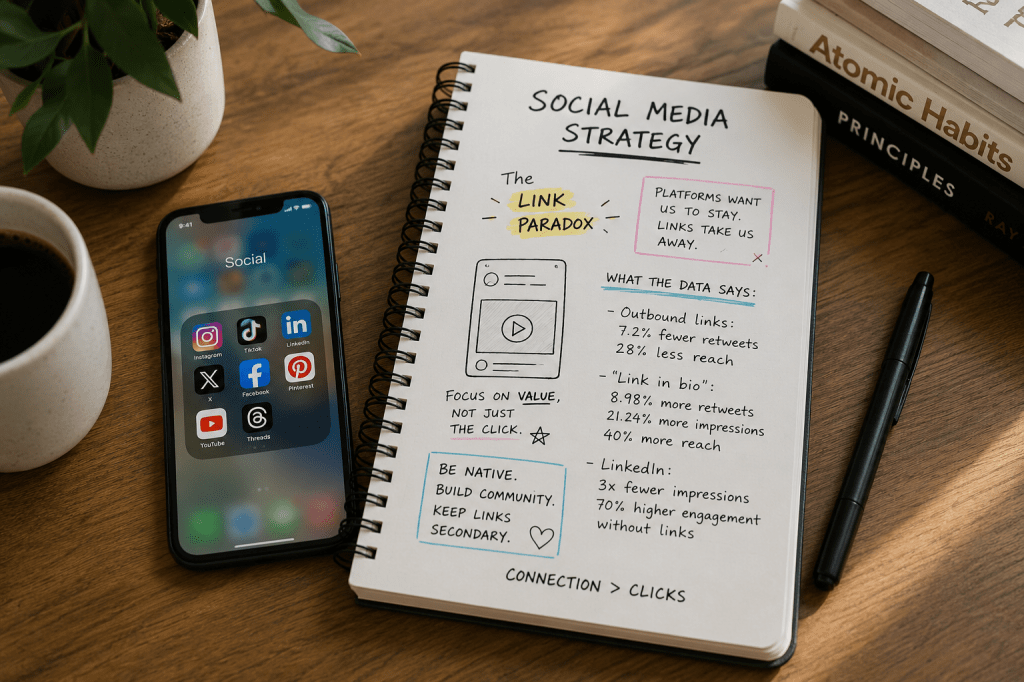
My biggest reason for this, as also supported by Phil Agnew in the Buffer podcast, “Why you shouldn’t add links to your social posts,” is that platforms are now built to keep users within their own ecosystems. Different from the past, when a could just be dropped and brands would expect results, they now have to be much more strategic. When a brand posts a direct outbound link, the algorithm often suppresses that content because it doesn’t want consumers to leave the app.
It’s easy to see how many could find it frustrating that the very tools meant to help them share their work can also act as a barrier.
The podcast highlighted a massive first-party study analyzing over 174 million tweets via Brandwatch, which revealed that tweets with an outbound link achieved 7.2% fewer retweets and 28% less reach than those without. However, what was even more eye opening was the comparison between tweets with direct links versus those using the phrase “link in bio.” The “link in bio” posts generated 8.98% more retweets, 21.24% more impressions, and 40% more reach.
This confirms what many of people feel: if a post feels too promotional people (and the algorithm) will lose interest immediately.
One example of this being done well is how modern brands have pivoted to the “link in bio” or “link in comments” strategy to bypass. Instead of cluttering a caption, they decide to focus on making the short-form content relatable, humorous, or educational. This approach feels much more genuine and entertaining, instead of strictly promotional, encouraging consumers to actually engage. Through this type of interaction, brands have a better ability to create community without the algorithm punishing them.
Additionally, Agnew points out that LinkedIn impressions decrease by three times when you post a link, as well as how engagement rates are 70% higher for posts without them.
I believe that at the end of the day, a brand’s reputation shouldn’t be tied to how many links they can add to their content, but how meaningfully they can connect with their audience. If they lose sight of that connection by focusing only on clicks, they can risk our content becoming boring or feeling disconnected. For brands, this means having to work with the platforms to stay relevant, which also means keeping the conversation native and the links secondary.
 DEAR SERIF
Leave a comment